Key Takeaways
- AGWA Investigation 691 may increase fire-rated glazing costs before a final ruling is issued. Suppliers often adjust pricing immediately after an anti-dumping investigation begins rather than waiting for a final determination.
- Fire-rated glazing sits on the project critical path. Delays to compliant glazing systems can affect approvals, occupancy certification, and practical completion.
- Fire-rated glass cannot be substituted without compliant evidence. Replacement products require evidence for the complete tested assembly under AS 1530.4.
- Supply-chain resilience matters as much as product certification. Suppliers with diversified sourcing and compliant documentation are better positioned to manage uncertainty.
Direct Answer
Will AGWA Investigation 691 affect fire-rated glass pricing?
Potentially yes. Even before a final anti-dumping decision is made, suppliers may introduce contingency pricing, review sourcing arrangements, or adjust quotations to manage commercial risk.
For projects with glazing packages scheduled months after tender award, this creates a gap between tender pricing and installation pricing.
Why Investigation 691 Matters to Construction Projects
AGWA Investigation 691 creates commercial uncertainty long before any legal determination.
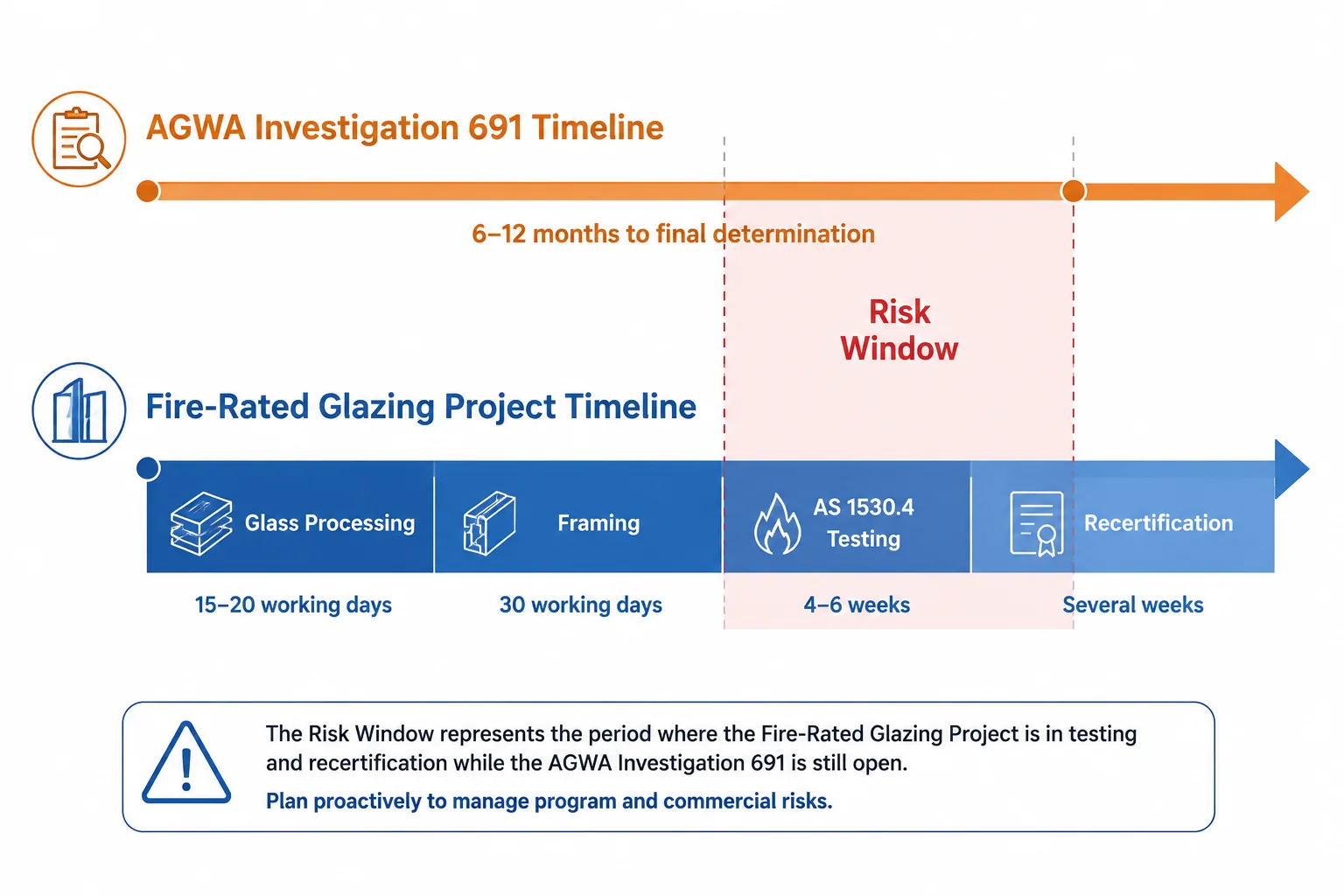
Most construction programmes run longer than anti-dumping investigations.
While a final determination may take several months, procurement decisions, supplier commitments, and glazing orders occur much earlier.
This means commercial exposure can begin well before any official outcome is announced.
Typical Fire-Rated Glazing Lead Times
| Activity | Typical Duration |
|---|---|
| Glass processing | 15 – 20 working days |
| Framing fabrication | 30 working days |
| Compliance review | Project dependent |
| AS 1530.4 testing (if required) | 4 – 6 weeks |
| Re-certification assessment | Several weeks |
Table Note: Durations vary by project complexity, supplier capability, and certification requirements.
Why Fire-Rated Glazing Is Different From Standard Glass
Fire-rated glazing systems must be assessed as a complete tested assembly.
Under Australian compliance pathways, certification is not based on glass alone.
The tested assembly normally includes:
- Fire-rated glass
- Framing system
- Intumescent seals
- Fixings
- Installation methodology
A change to any critical component may require reassessment of compliance evidence.
This is why replacing a fire-rated glazing product late in a project is significantly more complicated than replacing standard architectural glass.
A fire-rated glass product without appropriate Australian compliance evidence may not satisfy NCC evidence-of-suitability requirements. Certifiers typically require documentation supporting the complete tested assembly, not simply a product brochure or overseas marketing literature.
What Happens When a Supplier Changes Product Mid-Project?
A supplier substitution can trigger a new compliance review.
When a supplier changes manufacturing origin, product type, or tested configuration, project teams often need to revisit documentation. Typical consequences include:
- Additional RFIs from certifiers
- Requests for updated test evidence
- Design team reviews
- Procurement delays
- Programme extensions
At late project stages, approval delays can become more expensive than the original procurement savings.
Three Questions Every Procurement Manager Should Ask
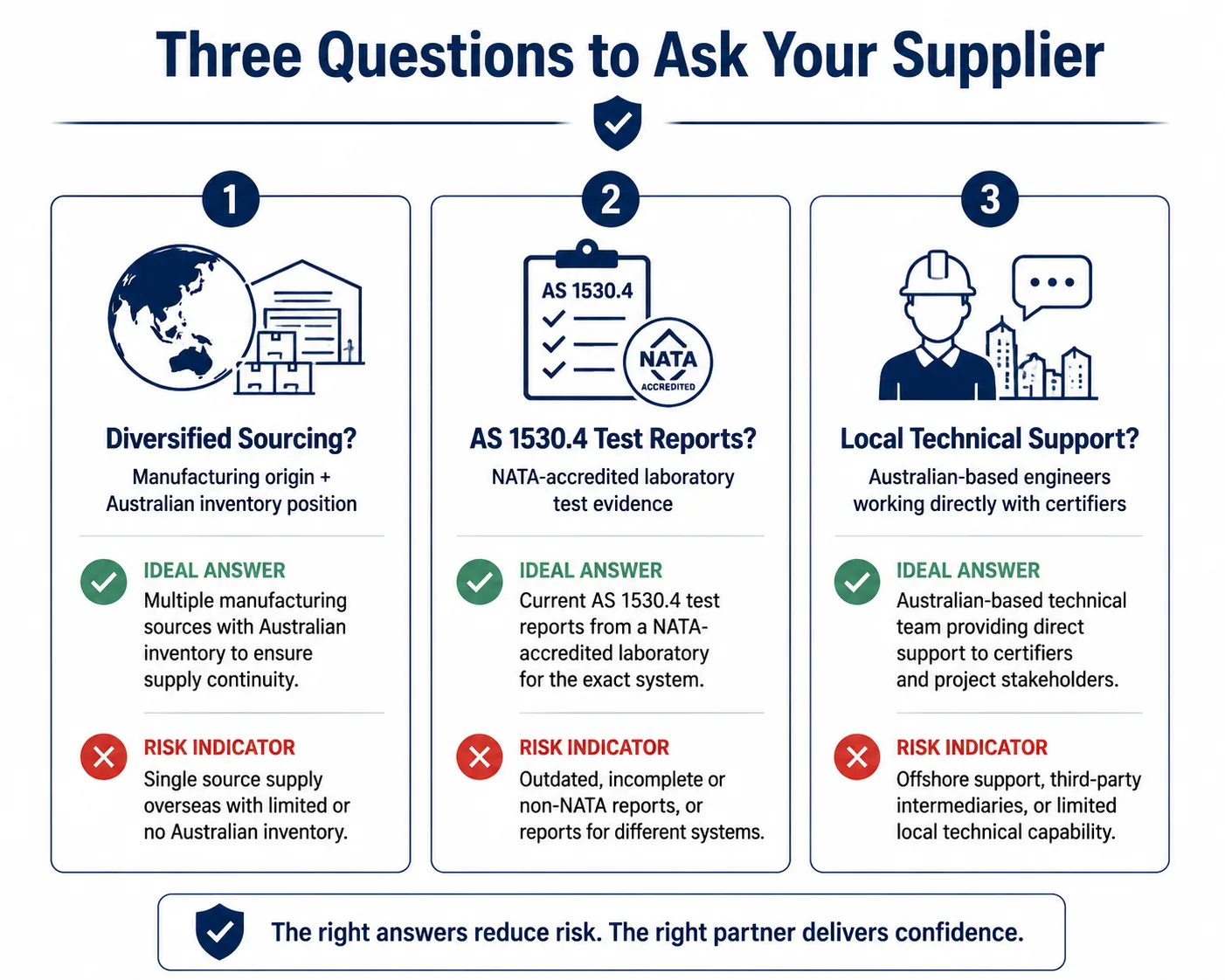
Question 1: Does the supplier have diversified sourcing?
A supplier dependent on a single manufacturing source may have fewer options if market conditions change.
Ask for manufacturing origin information, Australian inventory position, and alternative sourcing pathways.
Question 2: Can the supplier provide compliant fire-test evidence today?
The most important document is not a brochure. The most important document is the compliance evidence supporting the tested assembly.
Request AS 1530.4 test reports, assessment reports where applicable, supporting compliance documentation, and evidence pathway information.
Question 3: Is local technical support available?
Anti-dumping investigations often generate uncertainty, and uncertainty generates RFIs. Suppliers with local technical personnel can generally respond faster to certifier questions, documentation requests, design clarifications, and compliance reviews.
Compliance Pathway Overview
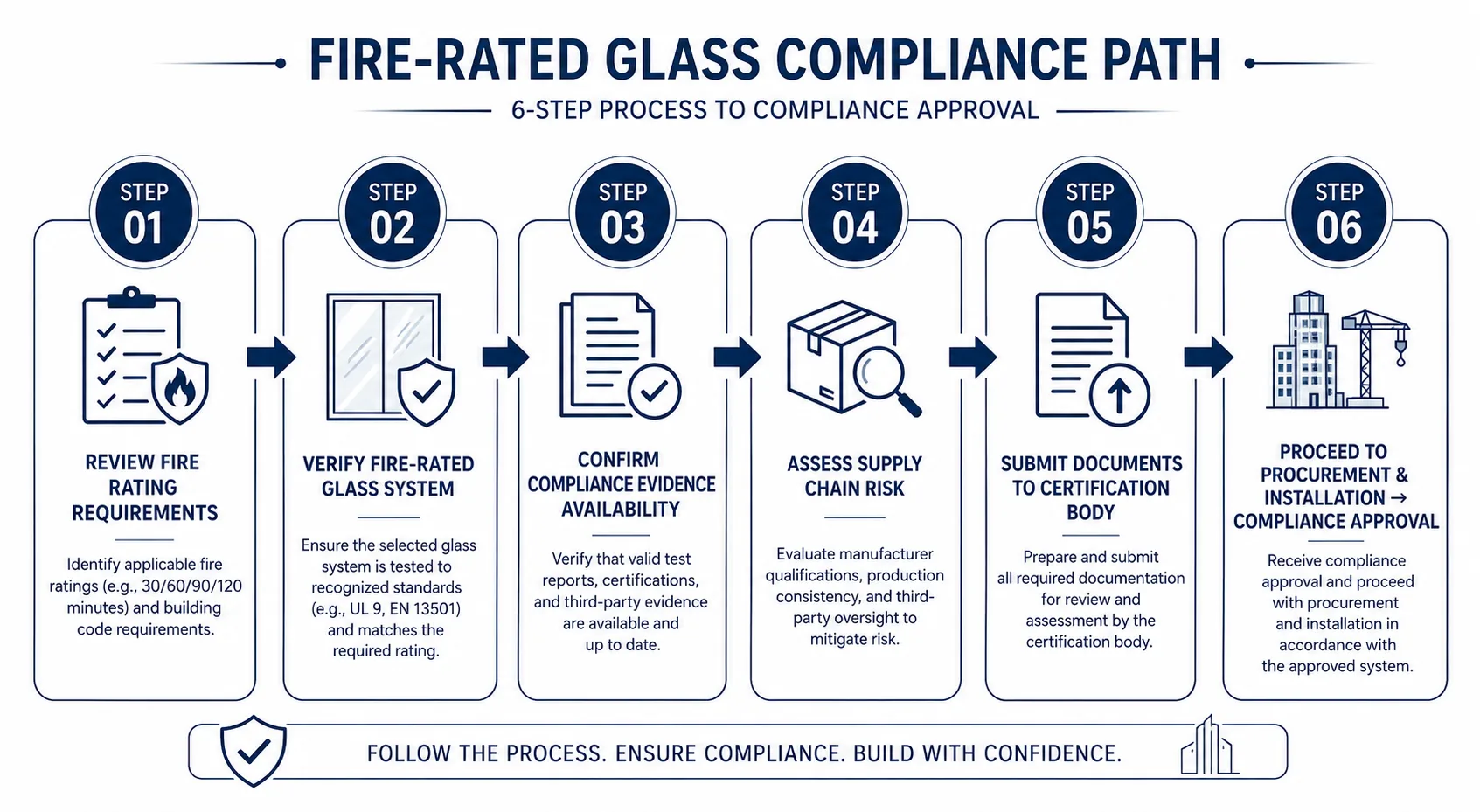
- Review project fire-rating requirements
- Verify proposed fire-rated glazing system
- Confirm compliance evidence availability
- Assess supply-chain exposure and sourcing risk
- Submit documentation to certifier
- Proceed to procurement and installation
Compliance Approval
Direct Answer
What should project teams do now?
Project teams should review supplier exposure, confirm compliance documentation availability, and understand how pricing may be affected if market conditions change during the construction programme.
Waiting until façade installation is scheduled may reduce available options.
Why Many Project Teams Review Documentation Early
Fire-rated glazing is both a compliance item and a programme item. The earlier documentation risks are identified, the easier they are to manage.
Projects that verify compliance evidence, supply-chain resilience, and certification pathways before procurement generally experience fewer disruptions during construction.
Work With PyroSpec Glass
PyroSpec Glass supports architects, certifiers, builders, and façade contractors with:
- Fire-rated glazing system documentation
- AS 1530.4 compliance evidence
- Technical specification support
- Project-specific compliance guidance
- Supply-chain and sourcing assistance
Need Documentation for Your Next Project?
PyroSpec provides fire-rated glazing systems supported by AS 1530.4 test reports, FRL evidence, engineering assessments, and NCC compliance documentation.