What happened — and what it actually means
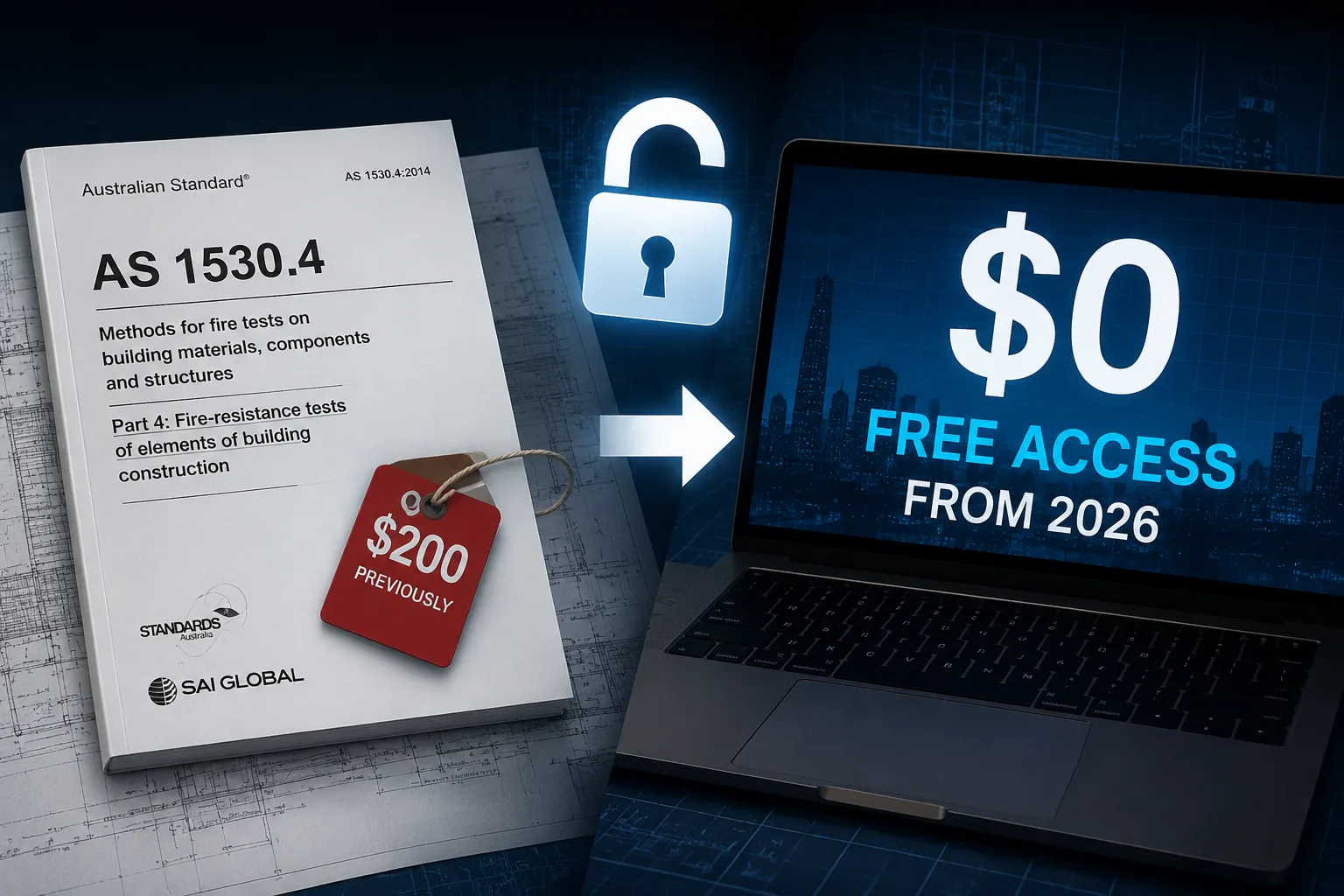
As part of a broader productivity and regulatory reform package, the Government committed $42.7 million over four years to provide free public access to mandatory Australian Standards referenced in the NCC. Standards Australia welcomed the commitment, calling it a major productivity and safety reform.
The key term is read-only. Once implemented, access will be online and view-only — standards cannot be downloaded or stored locally. That constraint matters for how practitioners will use the standard in practice, and it is worth understanding before planning your documentation workflow around it.
The reform was advocated for through the NCC Modernisation Project, which set out to simplify access to mandatory technical compliance information across the construction industry. On 30 April, the Commonwealth Housing Minister released an interim report for the NCC Modernisation Project, outlining five reform directions to modernise the NCC and its governance. Free access to mandatory standards sits within that broader framework.
For fire-rated glazing specifically, the standards now covered include:
AS 1530.4
Methods for fire tests on building materials, components and structures — Fire-resistance tests for elements of construction. The primary standard for FRL certification. This is the document that defines what a fire resistance test is, how it is conducted, and how results are reported. Previously $200–250 per copy from Standards Australia.
AS 1288
Glass in buildings — Selection and installation. Covers safety glass identification, human impact safety requirements, and glazing installation requirements.
AS 2047
Windows and external glazed doors in buildings. The performance standard covering structural adequacy, water penetration resistance, and air infiltration.
AS 4055
Wind loads for housing. Links wind classification to window and door performance requirements under AS 2047.
What the old model actually cost
The purchase price was never the real problem. The real cost was invisible: specifiers making decisions without direct access to the standard's actual text.
A junior architect specifying fire-rated glazing for the first time would not necessarily have AS 1530.4 on their desk. They would work from a senior colleague's notes, a manufacturer's datasheet, or assumptions. That gap between the standard's actual text and the specifier's working knowledge created compliance risk that surfaced months later — at the certifier's desk, as a rejected specification.
The standard was available to those who paid. It was not accessible to everyone who needed it. The reform closes that structural gap.
Key Insight
The purchase price was never the main barrier. The main barrier was that working from memory or manufacturer summaries instead of the standard itself created systematic specification errors. Free access eliminates the structural reason for that gap — but only for practitioners who use the access.

Who benefits — and how
| Stakeholder | Impact | Practical Change |
|---|---|---|
| Architects & Specifiers | High | Can now verify FRL selection, test evidence requirements, and installation conditions against the standard's actual text — not a summary. |
| Building Certifiers & Surveyors | High | Can cross-check manufacturer claims against AS 1530.4 language directly. A certifier reviewing a fire-rated glazing submission can open the standard alongside the test report in the same session. |
| Window & Door Fabricators | Medium | Small-to-medium fabricators can access AS 1530.4, AS 1288, and AS 2047 simultaneously. Reduces dependence on supplier technical support for basic compliance questions. |
| Fire-Rated Glass Suppliers | Positive — with nuance | Raises the specification floor. Customers will ask more informed questions about test evidence and system compatibility. Suppliers who cannot produce a complete assembly test report will be exposed faster. |
| Building Owners & Developers | Indirect | Better-informed specification and certification reduces compliance failure risk at occupancy. The benefit accumulates across the project lifecycle. |
What changes in practice — once access is live
1. Specification language will tighten
When a specifier can read AS 1530.4 directly, generic phrases like "fire-rated glass to AS 1530.4" will no longer pass scrutiny. The certifier — who also has the standard — will ask: which FRL? Which test configuration? Is the framing system covered in the test report? The specification becomes more precise because both sides of the conversation now share the same source document.
2. Test evidence becomes non-negotiable
Previously, a manufacturer could claim "tested to AS 1530.4" and the certifier might not have immediate access to verify what that entails. Once both parties can open the standard, the question shifts from "does this product claim compliance?" to "can you produce the specific NATA-accredited report for this exact glass-frame-seal configuration?" Suppliers without complete assembly documentation will lose ground to those who maintain it.
3. The certifier's workload shifts
A certifier currently spends time explaining standard requirements to specifiers who haven't read the document. Free read-only access reduces that basic educational burden. It does not replace domain knowledge — interpreting AS 1530.4 correctly still requires experience — but it removes the "I don't have the standard" barrier from the conversation entirely.
Real-World Example
Under the old model, a certifier might receive a spec stating "EI60 glazing to AS 1530.4" with no further detail, then spend time explaining that AS 1530.4 certifies test procedures, not products — and that the assembly (glass + frame + seals) must be tested as a complete system. Under the new model, a specifier with read-only access to AS 1530.4 can read that distinction before submitting. The certifier's time shifts from basic education to genuine compliance review.
Three things free access does not solve
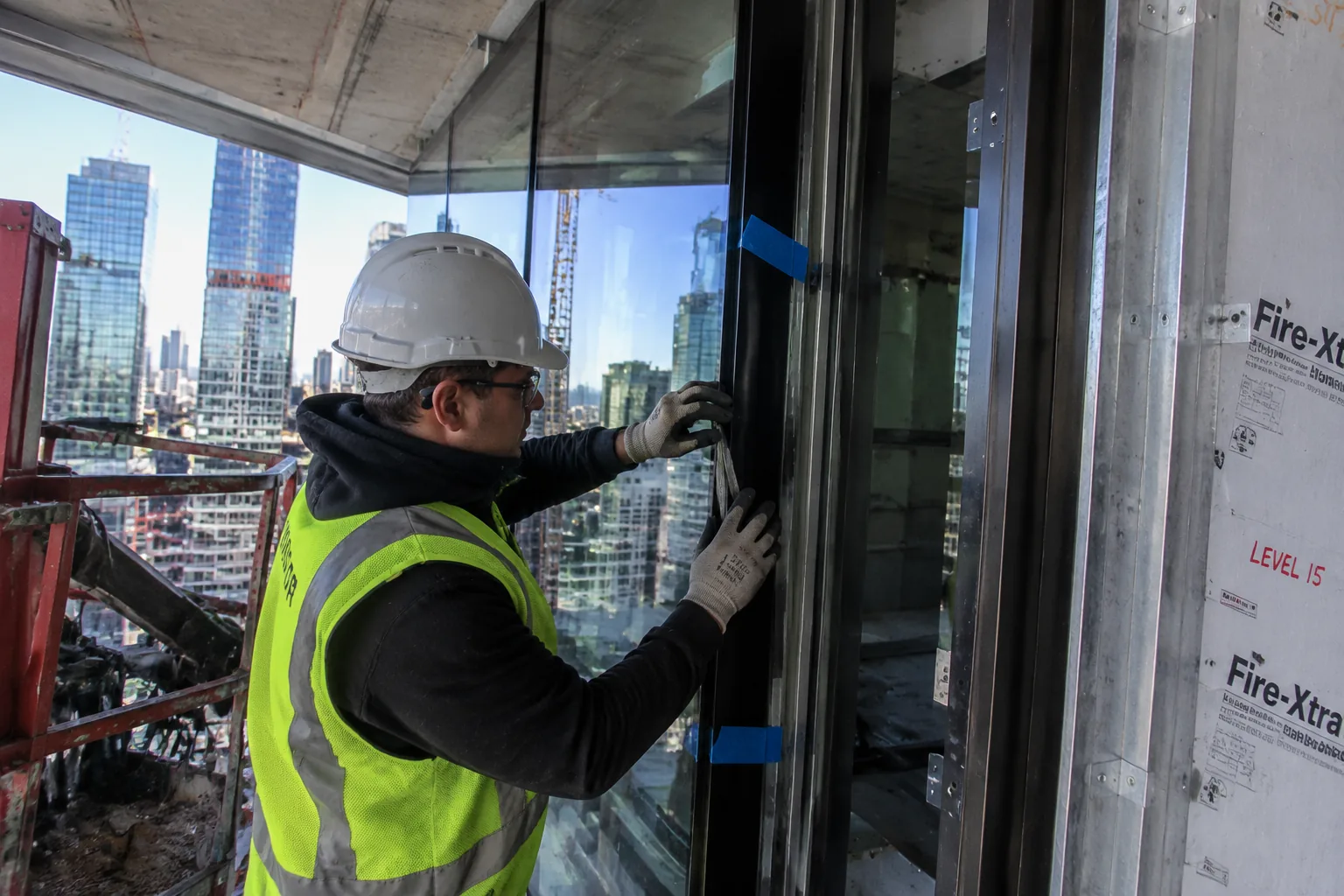
Free access to AS 1530.4 raises the floor. It does not close every gap.
- FRL selection still requires the NCC, not just AS 1530.4. AS 1530.4 defines how to conduct and report a fire resistance test. It does not tell you which FRL to specify for a Class 9b school in Victoria. That answer lives in the NCC Section C Deemed-to-Satisfy provisions, state-specific variations, and fire engineering reports. Free access to the test standard is not a substitute for understanding the regulatory framework that determines what to specify.
- System-level compliance still requires the right test report. AS 1530.4 tests complete assemblies — glass, frame, seals, and fixings together. A specifier who reads the standard can now verify that their supplier's test report matches the specified system. A specifier who skips that verification step gains nothing from free access. The standard makes it easier to ask the right question. It does not answer the question for you.
- Installation fidelity remains the industry's largest compliance risk. An AS 1530.4-tested assembly is only certified when installation matches the tested configuration — same frame dimensions, same seal product, same fixing pattern. Free access to the standard does not install the glass. The gap between specification and on-site installation is where most fire glazing compliance failures actually occur, and that gap is not closed by a policy change in Canberra.
The Opportunity
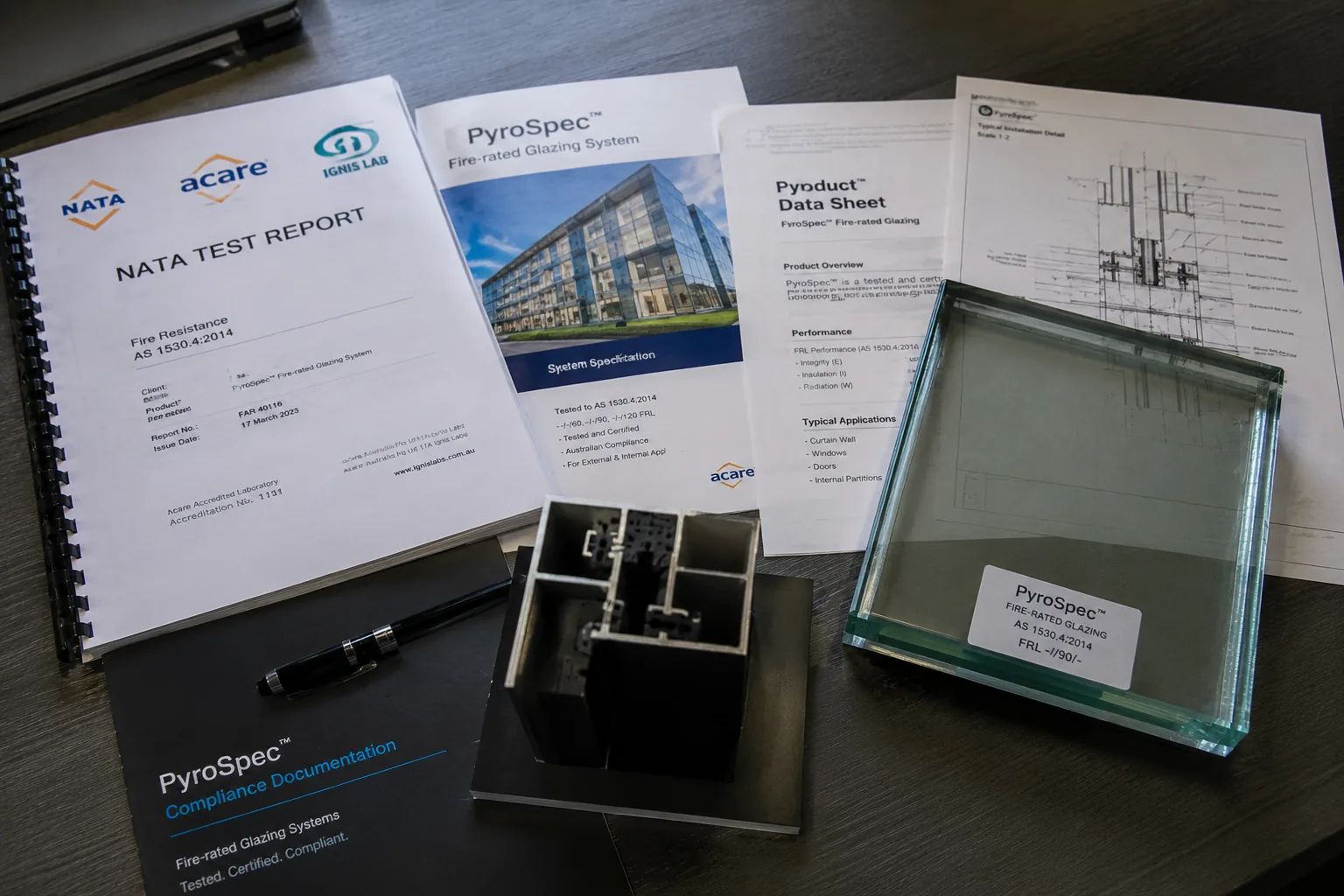
The best-positioned suppliers after this policy change will be those who already provide complete test evidence packages — not because they were forced to, but because their documentation is built to be read alongside the standard. When a certifier can open AS 1530.4 and your NATA-accredited test report in the same browser session, the compliance story writes itself.
What it means for fire-rated glass suppliers
The 2026 Budget is not neutral for importers and manufacturers. It shifts competitive advantage toward documentation quality.
Under the old model, a supplier could compete on price while offering thin compliance documentation, because the certifier might not have the standard to challenge it. Once read-only access is live, the certifier has the standard. The question shifts from "does this product claim AS 1530.4 compliance?" to "can you produce the full test report for this exact configuration?"
This benefits suppliers who:
- Maintain active NATA-accredited test reports for their current product lines
- Supply complete system documentation — glass, frame, and seals tested as a single assembly
- Provide certifier-ready compliance packages, not summary datasheets
- Can trace individual batches to specific test report configurations and installation conditions
It disadvantages suppliers who rely on generic compliance claims without documentary evidence, or who supply glass without verifying framing compatibility against a specific test report.
When the standard is behind a paywall, compliance is a negotiation. When the standard is freely accessible — read-only or not — compliance becomes a verification process. That shift is already underway.
Bottom Line
AS 1530.4 going public is not a pricing story. It is a specification-quality story.
The standard moves from a document that some practitioners own to a document that everyone in the supply chain can read. The result is not instant compliance improvement — it is a structural shift in who can ask informed questions, and who is expected to answer them.
For architects: write tighter specifications, because the certifier now has the same source document you do. For certifiers: spend less time on basic education, more on genuine compliance review. For suppliers: the quality of your test evidence — not just the quality of your glass — is now visible to everyone in the chain.
Free read-only access does not raise the ceiling on fire safety performance. It raises the floor. And for an industry where the floor is fire safety, that investment is exactly where it belongs.
Specify Fire-Rated Glazing With Confidence
Every PyroSpec system ships with a complete compliance package — NATA-accredited test reports, framing compatibility matrices, and certifier-ready documentation aligned with AS 1530.4.
Request Documentation