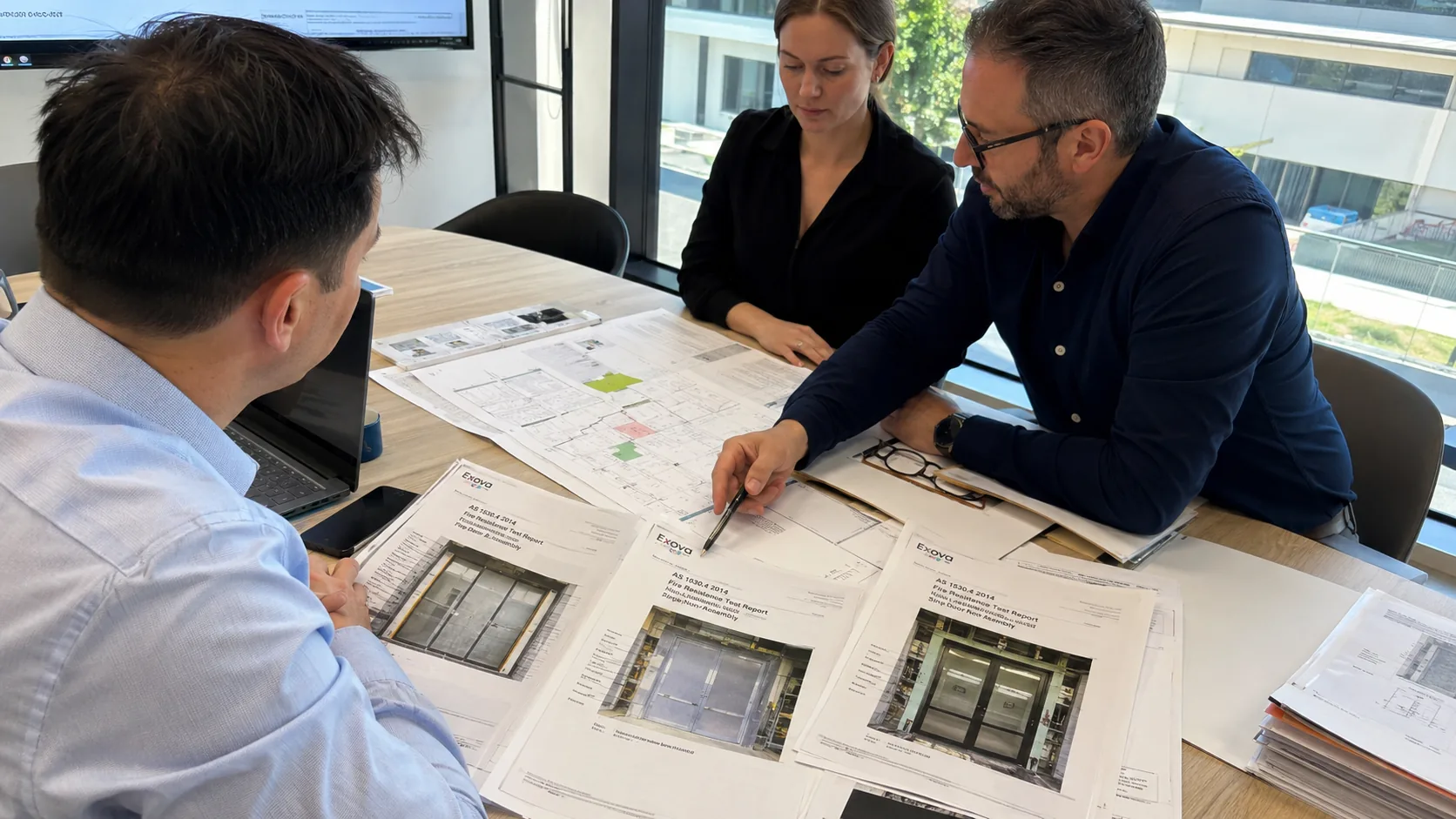
No — an AS 1530.4 wall test report does not automatically demonstrate compliance for a fire-rated door assembly.
Under Australian fire testing requirements, walls, doors, glazed screens and windows are tested under different configurations and often under different sections of AS 1530.4. A fire door assembly introduces additional performance variables including:
- Door leaf movement
- Frame-to-leaf clearances
- Hinges and hardware
- Latches and closers
- Intumescent seals
- Sidelights and overpanels
For this reason, certifiers typically require test evidence that matches the installed assembly or a valid engineering assessment extending the tested scope.
What Does AS 1530.4 Actually Test?
One of the most common misunderstandings in Australian fire-rated glazing is the belief that AS 1530.4 certifies a product.
It does not.
AS 1530.4 evaluates the fire performance of a specific tested assembly under defined laboratory conditions.
The test evidence applies to:
- The tested configuration
- The tested dimensions
- The tested framing system
- The tested glazing system
- The tested hardware
- The tested installation method
Changing any of these variables may require additional assessment or testing.
Fire Wall vs Fire Door Testing: What's the Difference?
| System | Typical Standard | Key Variables |
|---|---|---|
| Fire-rated wall | AS 1530.4 Section 11 | Fixed assembly, joints, perimeter seals |
| Fire-rated glazed screen | AS 1530.4 Section 11 | Frame system, glass size, fixing method |
| Fire door assembly | AS 1530.4 Section 10 + AS 1905.1 | Door leaf, hinges, locks, closers, seals |
| Fire window | AS 1530.4 applicable provisions | Opening mechanism, frame behaviour |
A wall assembly and a door assembly may contain the same fire-rated glass, but they are not considered the same tested system.
This distinction is regularly reviewed by certifiers, fire engineers and building surveyors during compliance assessment.
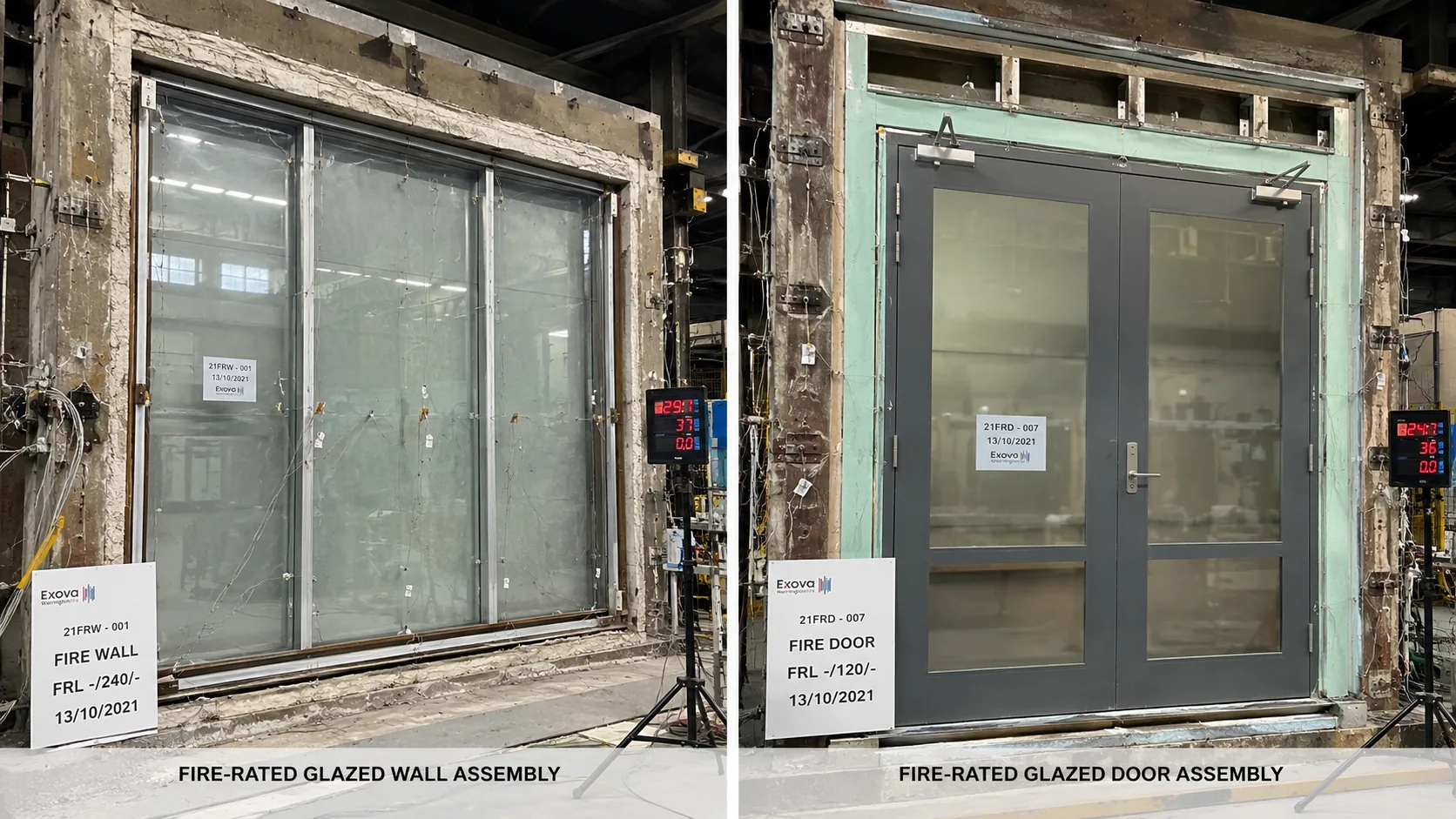
Why Certifiers Reject Wall Reports for Door Applications
When reviewing documentation, certifiers generally focus on the tested specimen rather than the FRL alone.
A report may show:
- FRL -/60/30
- NATA-accredited testing
- Correct fire-rated glazing product
Yet still be rejected because the tested specimen was a fixed wall while the installed application is a hinged fire door.
The issue is not the glass.
The issue is that the tested assembly does not match the installed assembly.
The Three Documents Certifiers Usually Check
Before accepting a fire-rated glazing submission, most certifiers review:
1. AS 1530.4 Test Report
Confirms fire performance of the tested assembly.
2. AS 1905.1 Compliance Evidence
Required where fire-resistant doorsets are involved.
AS 1905.1 establishes requirements for:
- Fire door construction
- Hardware
- Clearances
- Identification tags
- Ongoing maintenance obligations
3. NCC Compliance Documentation
The installed system must satisfy the requirements of the National Construction Code (NCC) and any applicable Performance Requirements.
Common Compliance Mistakes
Using a Wall Report for a Fire Door
Most common documentation error.
Using a Single-Leaf Test for a Double-Leaf Door
Meeting stiles introduce additional fire performance considerations.
Adding a Sidelight Not Included in the Test
The junction between the sidelight and the door frame becomes part of the fire-resistant assembly.
Changing the Frame Material
Steel, timber and aluminium systems behave differently during furnace exposure.
Changing the Installation Substrate
Concrete walls, masonry walls and lightweight stud walls may require separate evidence.
Quick Compliance Matrix
| Installed System | Evidence Typically Required |
|---|---|
| Fixed fire-rated glazed wall | AS 1530.4 wall test report |
| Fire-rated glazed screen | Relevant AS 1530.4 glazed screen evidence |
| Single fire door | Door test report + AS 1905.1 compliance |
| Double fire door | Double-leaf test evidence |
| Door with sidelight | Composite assembly evidence |
| Door with overpanel | Specific tested configuration or engineering assessment |
How to Verify Your Fire Test Report
Before submitting documentation to a certifier, confirm:
- Tested configuration matches installed configuration
- Fire rating matches specification
- Laboratory accreditation is valid
- Glass product codes match site materials
- Frame system matches tested assembly
- Hardware matches tested assembly
- Installation method falls within tested scope
- Any variations are covered by an engineering assessment
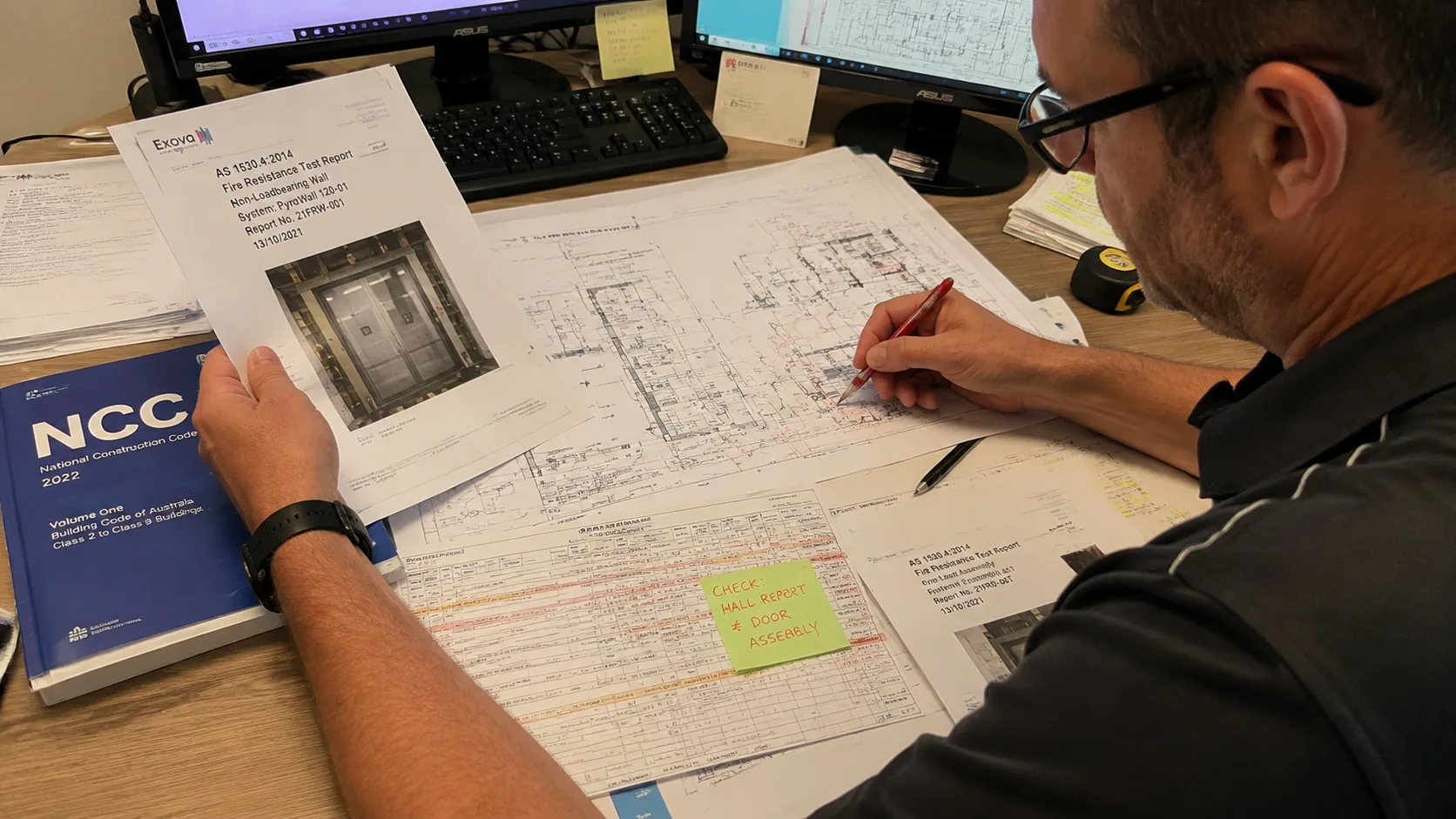
Key Takeaway
A fire-rated glazing system is not simply a piece of fire-rated glass.
Australian compliance requirements evaluate the performance of the entire assembly.
When reviewing AS 1530.4 evidence, always ask:
"Does the tested assembly match the assembly being installed?"
That single question prevents the majority of documentation rejections seen on Australian construction projects.
Get the Right Test Evidence for Your Fire-Rated Glazing Specification
PyroSpec provides fire-rated glazing systems supported by AS 1530.4 test reports, FRL evidence, engineering assessments, and NCC compliance documentation. Project-specific technical support available.
Request Technical Documentation